Past Missions
HuskySat-1link
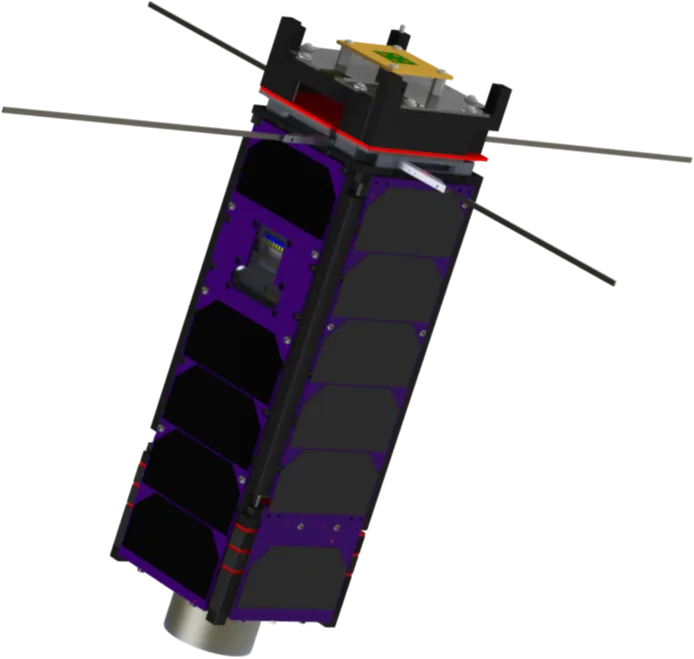
The HuskySat-1 (HS-1) is a 3U CubeSat designed, built, and tested by the Husky Satellite Lab. HS-1's goal was to test two experimental payloads, a pulsed plasma thruster (PPT), and a high-frequency K-band communication system, as well as hosting an Amateur Radio Linear Transponder.
HS-1 was developed by an interdisciplinary team at the University of Washington. It was aboard NASA's Cygnus NG-12 when it launched on November 2, 2019, and was deployed into Low Earth Orbit on January 31, 2020 to become the first amateur, student-built satellite from Washington state.
This CubeSat demonstrated the capabilities of new technologies being developed at the University of Washington and expanded the capabilities of CubeSats as a whole. In particular, the PPT and high-gain communications system formed the core technology suite on board the satellite. The HS-1 also flew a newly developed amateur radio linear transponder developed by AMSAT, aimed at contributing to the worldwide communication networks built and operated by ham radio enthusiasts.
Status: Complete
| Mission Type | 3U CubeSat |
|---|---|
| Launch Date | October 10th, 2019 |
| Deployment Date | January 31st, 2020 |
| Deployment Location | Low Earth Orbit |
| Mission Completion Date | June 1st, 2020 |
PHAT-1link
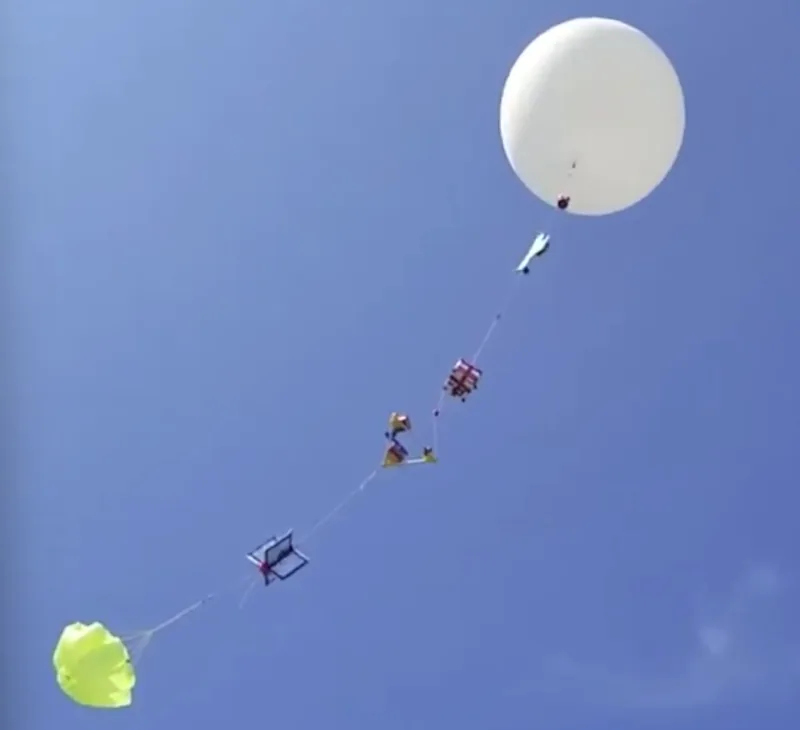
While satellite launches are the ultimate goal of HSL, sometimes results are needed in a more immediate (or at least more cost-effective) method. To accomplish this, we created our first Platform for High Altitude Testing (PHAT-1) in the 2018-19 school year. This allowed the team to improve on and experiment with the technology used in the HuskySat-1 mission, as well as try out new techniques for future missions.
The PHAT-1 mission consisted of two parts: a system bus, containing mission hardware, and a payload section, both of which hung below a high altitude balloon. The balloon was then launched to ~90,000 feet. Components on the bus included main power, data logging, and controls, as well as a GPS, magnetometer, and altimeter. The payload section consisted of a camera, pulsed plasma thruster (PPT) and deployable langmuir probe.
Unfortunately, not long after reaching its operational altitude, contact with the PHAT-1 was lost. Flight trajectory puts the landing point in the middle of a reservoir near the launch site, so the onboard data was never recovered.
Still, the mission provided useful insight for future missions. The development of the PPT led to a new ignitor/charge board design that is more compact than that used in HuskySat-1's PPT. The mission opened up new ideas for computational software, and the lack of recovery reinforced the need for effective and efficient radio transmission.
Status: Complete
| Mission Type | High-Altitude Balloon |
|---|---|
| Launch Date | June 1st, 2019 |
| Launch Altitude | ~90,000 feet |
| Deployment Location | Moses Lake, WA |
| Mission Completion Date | June 1st, 2019 |
PHAT-3link
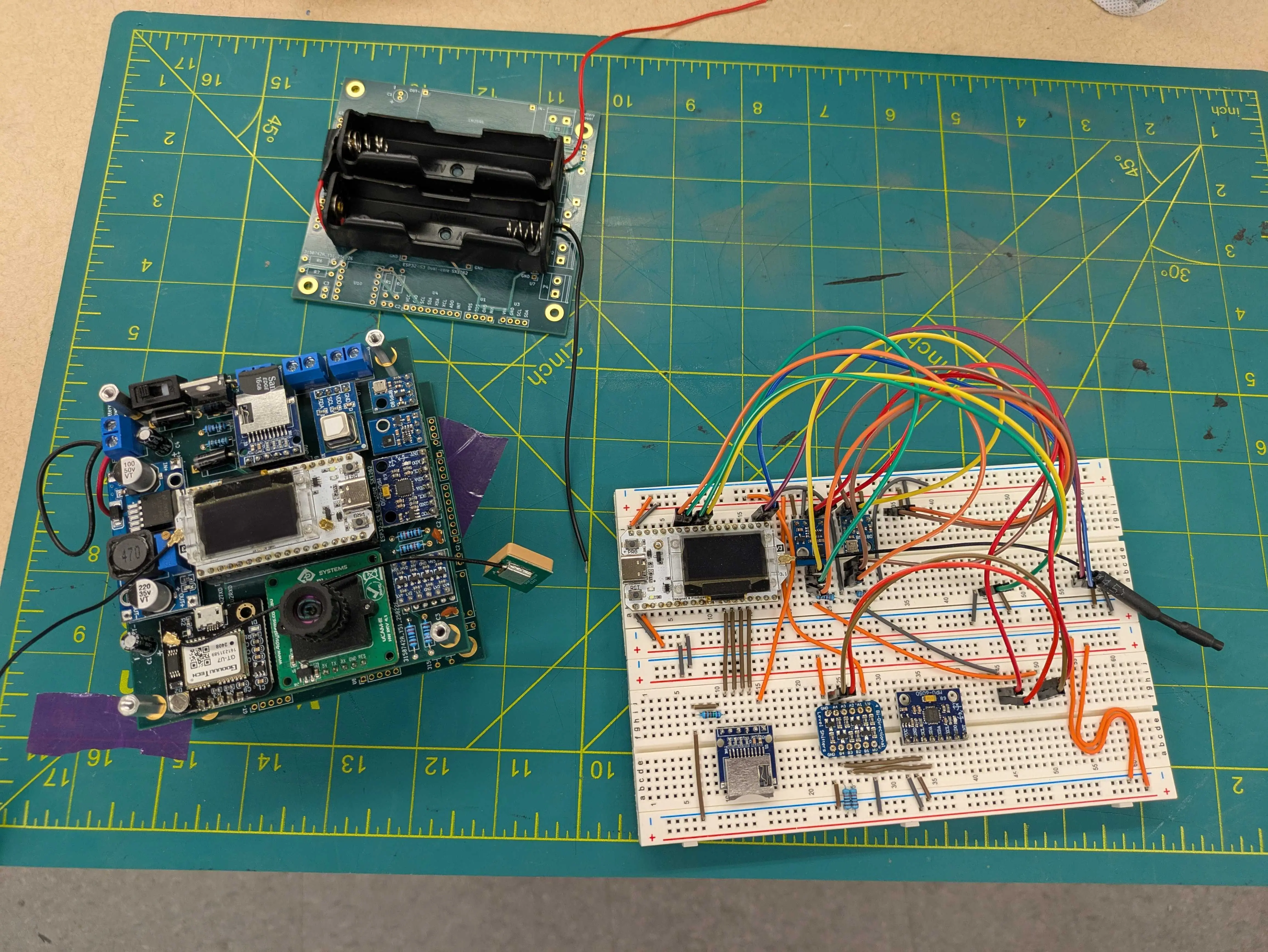
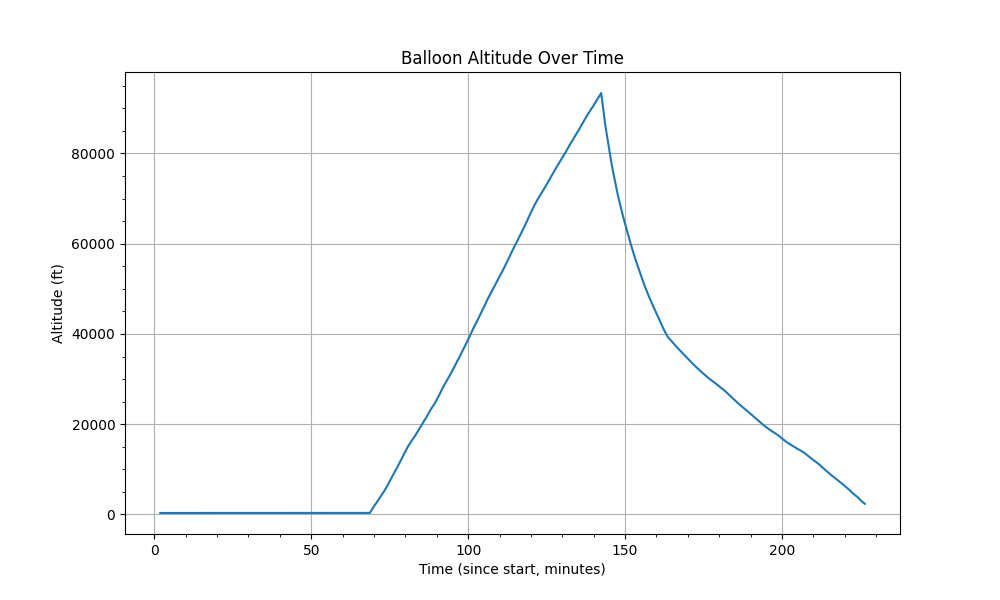
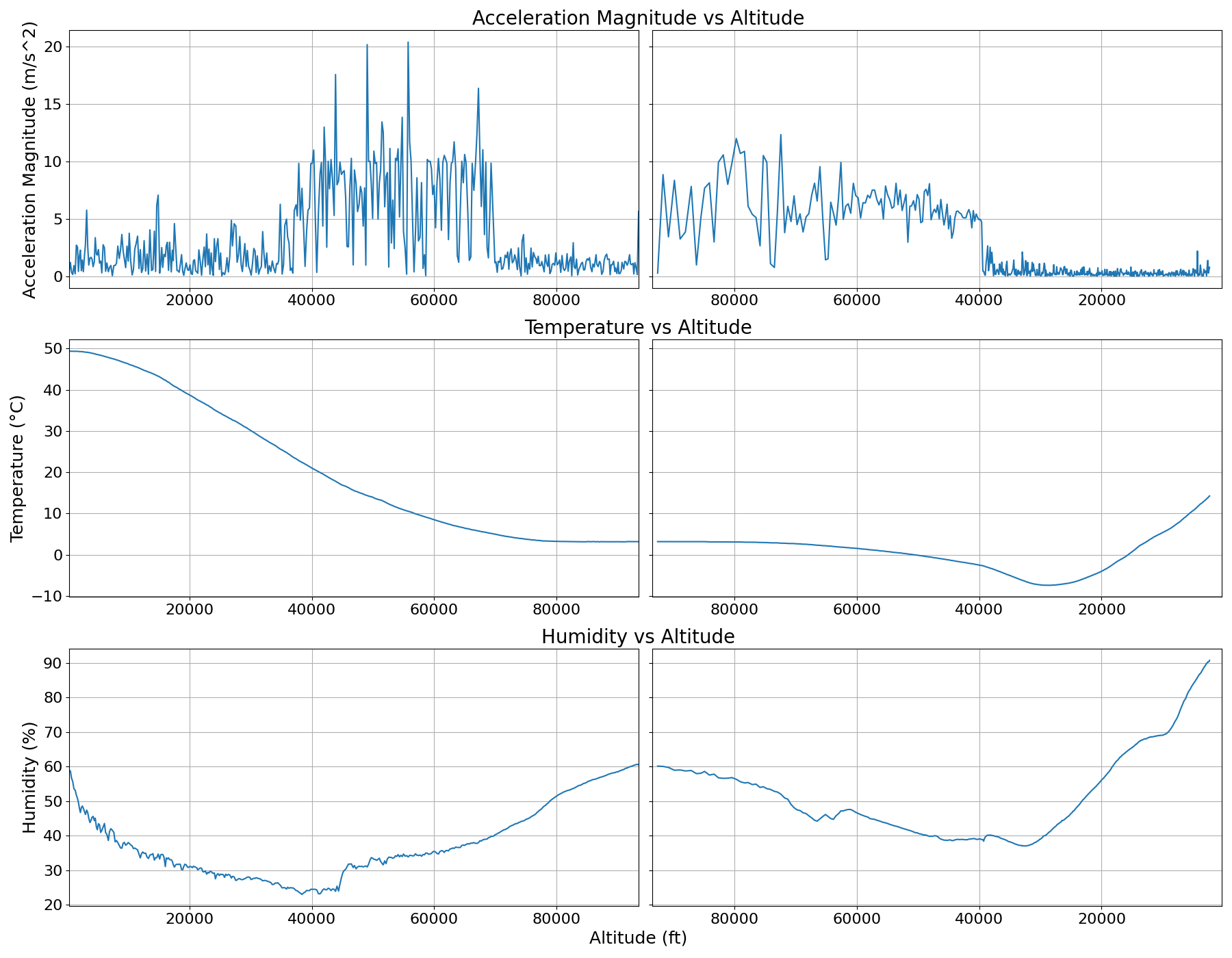
On May 18th, 2026, the PHAT-3 weather balloon and payload were successfully launched, marking the culmination of two years of rigorous planning and seamless launch-day coordination. Flight data confirms a stable ascent, with the balloon steadily climbing for over an hour to reach a peak altitude exceeding 93,000 feet. Telemetry captured during the climb showed dynamic environmental shifts, with temperatures plummeting into the sub-zero range (Celsius) and significant fluctuations in humidity as the payload passed through different atmospheric layers.
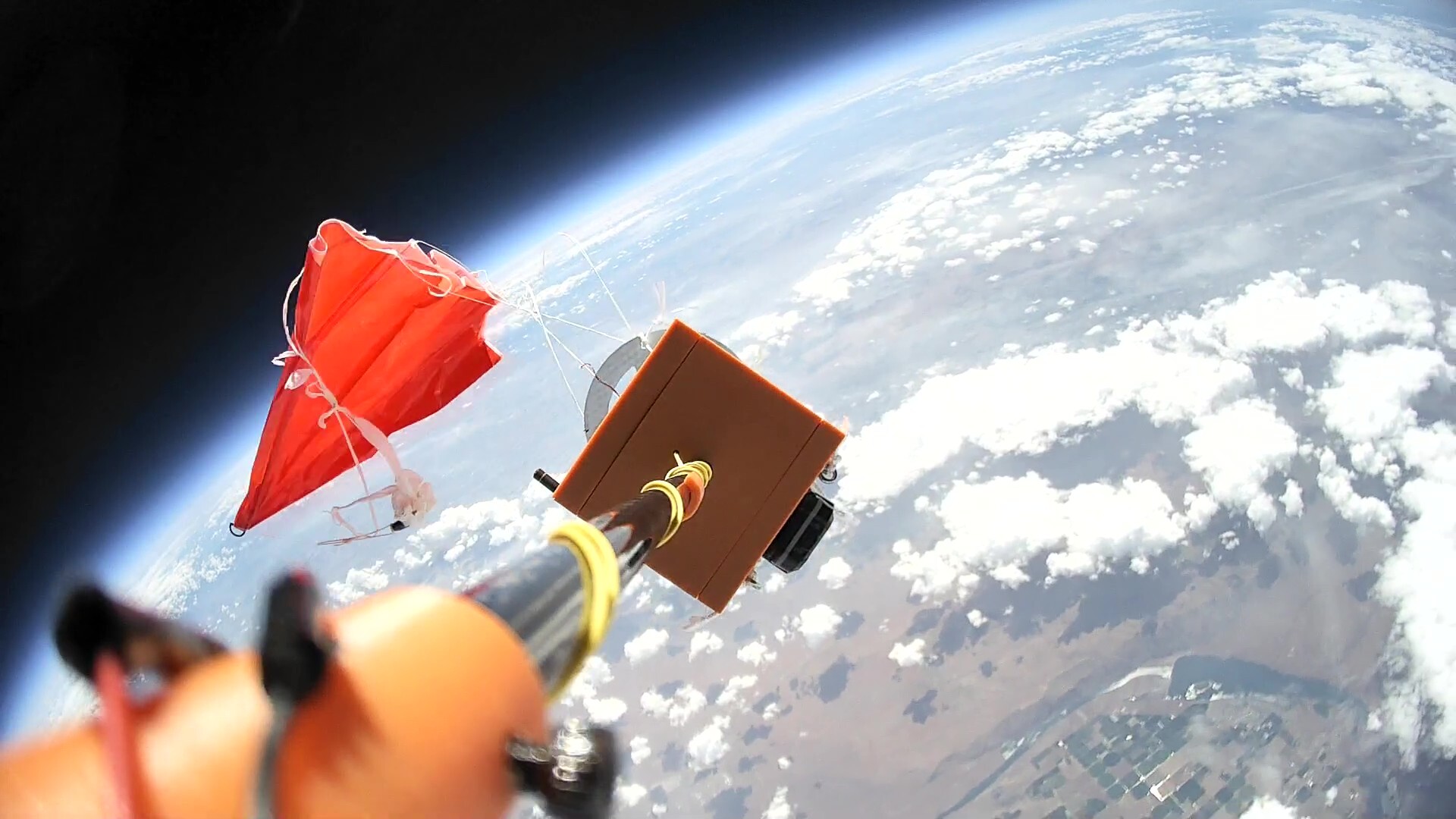
The journey was not without its turbulent moments. Onboard sensors recorded distinct periods of high acceleration and mechanical stress, particularly during the later stages of ascent where part of the selfie stick became tangled in the parachute cords and immediately following the balloon's burst at peak altitude. Despite the chaotic descent, the team successfully tracked and recovered the main payload, retrieving vital GPS logs, pressure data, and the primary sensor array. While one camera was unfortunately lost during the turbulent fall back to Earth, the remaining equipment survived intact, providing a wealth of high-quality data.
With the hardware safely back on the ground, the team has shifted focus to post-flight data analysis and media production. Marc Alwan is currently transforming the raw telemetry into detailed visualizations, while Marcin Anforowicz is editing the surviving onboard footage into a mission video. The team will hold a comprehensive debriefing session on May 28th to present the full findings and showcase the PHAT-3 mission at an upcoming tech meeting. Also part of the project were Yehoshua Luna, Shriya Tiku, Reeva Nedungadi, and David Magidson.
Status: Successful
| Launch Date | May 2026 |
|---|---|
| Mission Type | High-Altitude Balloon Testing |
| Test Altitude | ~93,000 feet |
| Primary Purpose | HS-2/HS-3 System Validation |
| Launch Sites | Moses Lake, WA & Others |
Mission CHNOOKlink
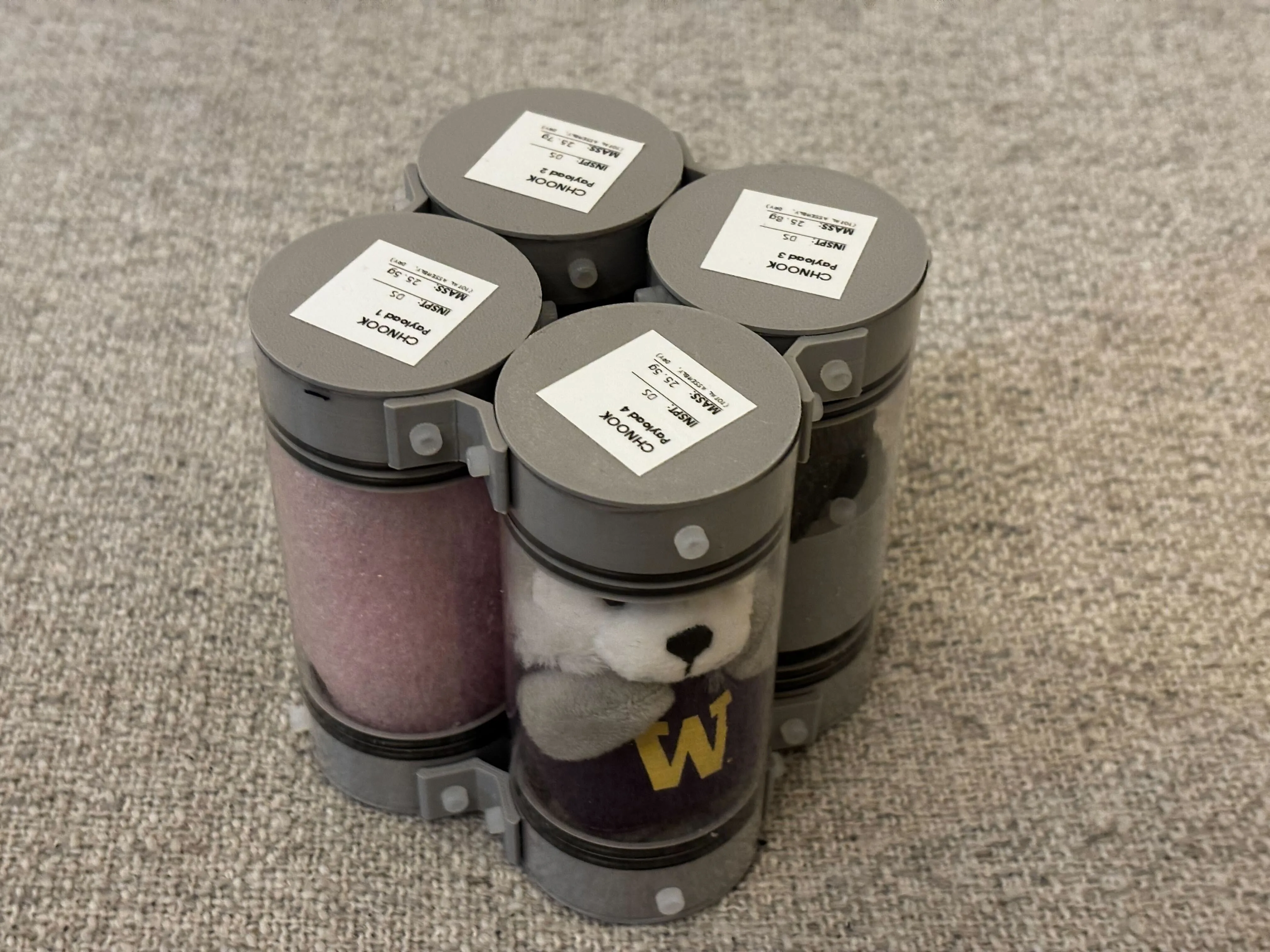
Mission CHNOOK was our successful multi-payload sub-orbital package that flew with Blue Origin on a New Shepard flight. This mission represented a revival and reimagining of our previous Mini-Mee payload, focused on community outreach, biological experiments, and technology demonstrations.
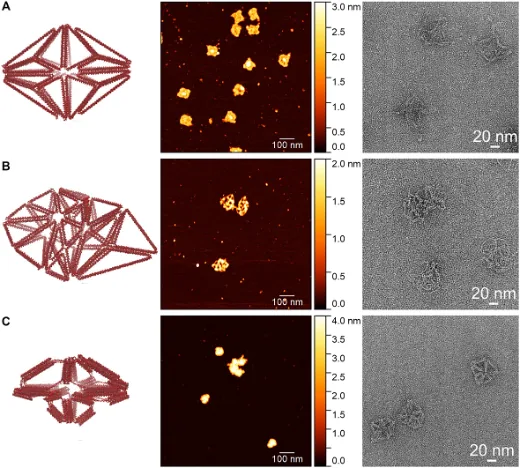
The mission featured four crowd-sourced payloads integrated into a single package: Business Payloads for HSL outreach (including a UW mini husky mascot, student artwork on SD card, and public name submissions), Biology Payloads testing DNA origami structures under launch and microgravity conditions, and HS-2 Demonstration Payloads validating designs for our upcoming HS-2 LEO mission and HS-3 lunar mission.
This mission provided valuable flight heritage for our systems while creating meaningful connections with the UW campus, Seattle community, and Washington K-12 schools. We partnered with Mighty Crayon, a 501(c)(3) nonprofit, to include artwork from underserved communities worldwide.
Status: Complete
| Mission Type | Sub-Orbital Multi-Payload |
|---|---|
| Launch Vehicle | Blue Origin New Shepard |
| Launch Date | Completed New Shepard flight |
| Payload Size | 4×4×8 inch mini-locker |